The candy apple started as a Christmas display.
The bright red candy apple is a Halloween favourite today. The best-known story says it began in 1908 as a Christmas window display in Newark, New Jersey. That story was written down 40 years later, and sugar-coated apples may be even older.
The red candy apple is usually traced to William Kolb's Christmas window in Newark in 1908, but that story was written down decades later, and sugar-coated apples may be older.
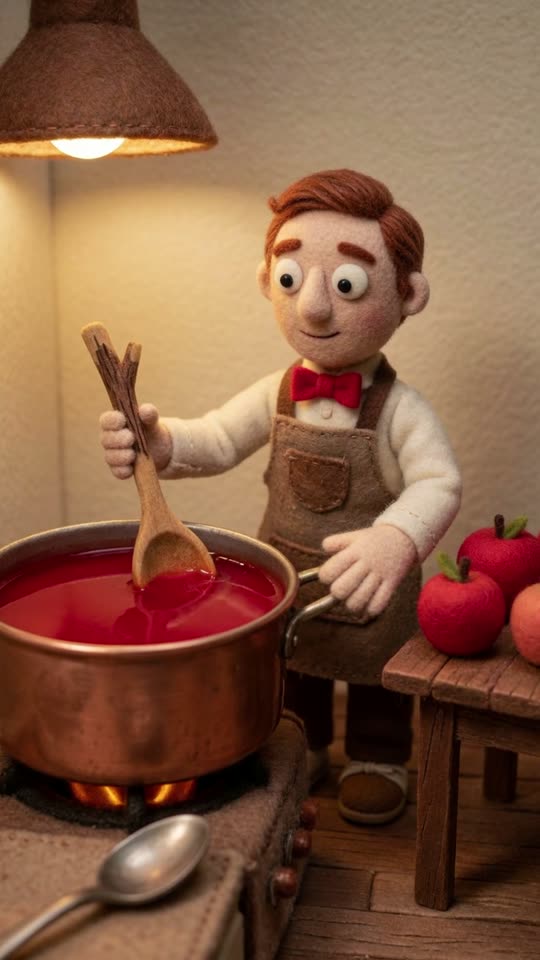
In 1908, William W. Kolb was a candy maker in Newark, New Jersey. Christmas was coming. He was making a red candy flavoured with cinnamon, to sell over the holidays.
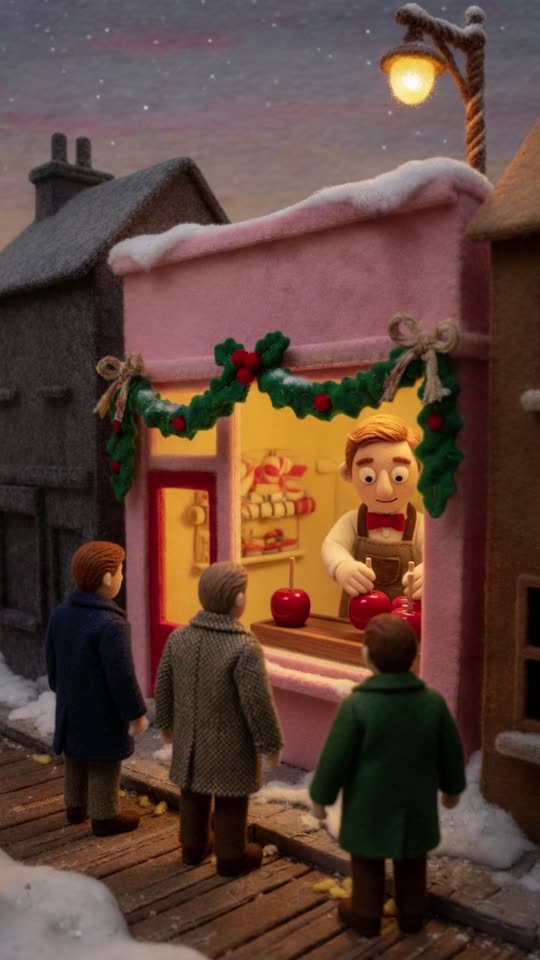
The story goes that Kolb dipped some apples on sticks into his hot red candy syrup. The syrup set into a hard, shiny shell. He put the apples in his shop window. People walking past were more interested in the apples than in the sweets he meant to sell. He sold the first ones for five cents each. Later he sold thousands every year.
The idea spread fast. Candy apples soon turned up at the Jersey Shore, the seaside towns of New Jersey. They were sold at circuses and in sweet shops across the country. They were cheap to make and easy to sell from a stall. From the early 1900s, they also became a popular Halloween treat.
Apples already fitted Halloween well. They are picked in autumn. In Ireland, Scotland and England, people played apple games on Halloween night. Irish and Scottish families brought those games with them to North America.
But how sure is the Kolb story? Most of it comes from one local newspaper, the Newark News, in 1948. That was 40 years after it happened. The story explains how the red American candy apple became famous. It does not prove that nobody had ever coated an apple in sugar before. Some books say candied apples were sold in London in the 1890s, though the proof is thin.
From the late 1960s, scary stories about tampered apples spread. Tampered means someone had secretly put something harmful inside. Most of these stories turned out to be hoaxes, or made-up tricks. Even so, parents stopped trusting homemade treats. Candy apples left the trick-or-treat bag, but they stayed at fairs, where you can still buy them today.
Want to know more?The full history, step by step
The story you've heard
Candy apples, with their hard, shiny, ruby-red shell, are a fixture of autumn fairs and Halloween parties. They crack when you bite them, stick to your teeth and somehow taste better outdoors on a cold evening.
Ask where they came from and you will usually hear one name: William W. Kolb, a candy maker in Newark, New Jersey. The story goes that in 1908 he was trying to sell red cinnamon candy for Christmas, dipped a few apples into his glossy syrup, and put them in the shop window. They were never meant for Halloween at all.
What the record says
The account most often repeated comes from the Newark News in 1948, forty years after the event. According to that report, Kolb was experimenting with red cinnamon candy for the Christmas trade when he dipped apples on sticks into the mixture and displayed them. Passers-by were more interested in the apples than in the sweets he had meant to sell. He sold the first batch for five cents each, and later sold thousands a year.
The same report says the idea spread quickly. Candy apples soon appeared along the Jersey Shore, at circuses and in sweet shops across the country. Later reporting in the Newark Evening News, in 1964, connected the first candy apple brand to Kolb's wife, Chelle.
The Library of Congress repeats the Kolb story, describing it as an accidental invention and noting that candy apples became fashionable Halloween treats in the early 1900s and stayed popular until the 1970s.
It is worth being careful about what this proves. The Kolb account is a story about one confectioner and one shop window, told by a local newspaper decades later. It explains how the bright red American candy apple became famous, but it is not proof that nobody anywhere had coated an apple in sugar before. Some reference works say candied apples were already being sold in London in the 1890s, though the evidence for that is thin.
Why apples and Halloween fit so well
Even if the red candy apple began at Christmas, it was natural that it drifted towards October. Apples are harvested in autumn, and in Ireland, Scotland and England they were already part of Halloween games, from bobbing in tubs of water to biting apples hung on strings. Irish and Scottish immigrants carried those customs to North America, so apples were waiting at the Halloween party long before the candy coating arrived.
A candy apple was also cheap to make and easy to sell from a stall. Fairground vendors could dip dozens at once and stand them in rows, glowing red under the lights. That made them perfect for boardwalks, travelling circuses and harvest fairs, where they are still sold today.
A cousin across the Atlantic
In Britain and Ireland, the closest relative is the toffee apple. It is coated in a hard sugar or toffee shell and is especially linked with Bonfire Night on 5 November in England, and with Halloween in Scotland and Northern Ireland. Caramel apples, with their soft, chewy coating, are a different treat again, made by a different method.
Further afield, cooks in northern China make tanghulu, small fruits such as hawthorn berries threaded on sticks and dipped in hard sugar syrup. The idea of coating fruit in boiling sugar seems to have occurred to people in many places, which is one more reason to treat any single 'first' with a little caution.
On your plate today
Candy apples fell out of favour as a door-to-door treat from the late 1960s, when newspapers spread stories of tampered apples and parents were urged to throw away anything homemade. Most of those stories turned out to be hoaxes, but the damage was done, and wrapped sweets took over the trick-or-treat bag.
At the fair, though, the candy apple never went away. The red colour still nods to Kolb's cinnamon candy, and the stick still makes it easy to carry. Whether or not he was truly the first, the treat that made his name started out dressed for Christmas.
Timeline
- 1890sCandied apples are reportedly sold in London, though the evidence is thin.
- 1908William W. Kolb of Newark is said to dip apples in red cinnamon candy for a Christmas window display.
- Early 1900sCandy apples spread to the Jersey Shore, circuses and sweet shops, and become a Halloween favourite.
- 1948The Newark News publishes the account of Kolb's first batch.
- 1964The Newark Evening News links the first candy apple brand to Kolb's wife, Chelle.
Sources
- The Origins of Halloween Traditions · Library of Congress, Headlines and Heroes
- Candy Apple (Red Candy Apple) · Barry Popik, The Big Apple
- Candy apple · Wikipedia
- The Razor Blade in the Apple: A Modern History of Trick or Treating · Four Pounds Flour (Sarah Lohman)
Spotted something we got wrong? Message us on any of our channels and we'll check it.
Woolly facts
The best-known candy apple story starts at Christmas, not Halloween: a 1908 shop window display in Newark, New Jersey.
According to a 1948 newspaper report, William Kolb sold his first candy apples in Newark for just five cents each.
William Kolb's first candy apples, the story goes, were dipped in red cinnamon candy he had made to sell at Christmas.
The story of William Kolb's 1908 candy apple was printed in the Newark News in 1948, forty years after it happened.
In Britain, the candy apple's cousin is the toffee apple, which in England is especially linked with Bonfire Night on 5 November.
In northern China, tanghulu are small fruits such as hawthorn berries, threaded on sticks and dipped in hard sugar syrup, a bit like candy apples.
Candy apples and caramel apples are different treats: a caramel apple is soft and chewy, while a candy apple has a hard, glassy shell.
In the late 1960s, more than 20 cases of apple tampering in New Jersey were reported, and all of them were later found to be hoaxes.