Candy corn was once sold as chicken feed.
Candy corn is a striped sweet shaped like a kernel of corn. It was never meant for chickens. But one company really did sell it to children under the name Chicken Feed, in a box with a rooster on it.
It was never meant for hens, but the Goelitz company did sell candy corn to children under the name Chicken Feed, in a box with a rooster on it.
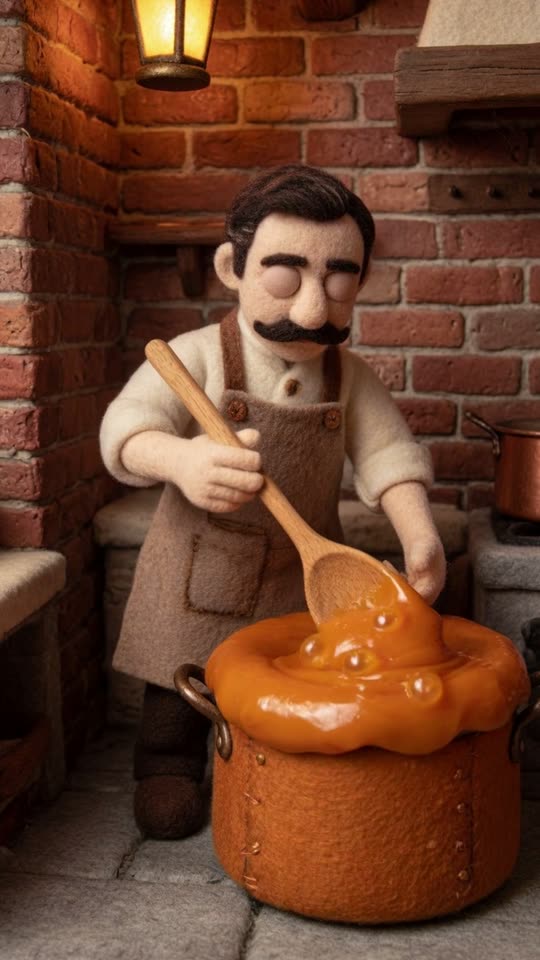
Candy corn is a small sweet with three stripes: white, orange and yellow. It is shaped like a kernel, or seed, of corn. Most histories say George Renninger invented it in the 1880s. He was a candy maker at the Wunderle Candy Company in Philadelphia. But the proof is thin. The story mostly comes from what one candy-making family remembered, so nobody knows for sure.
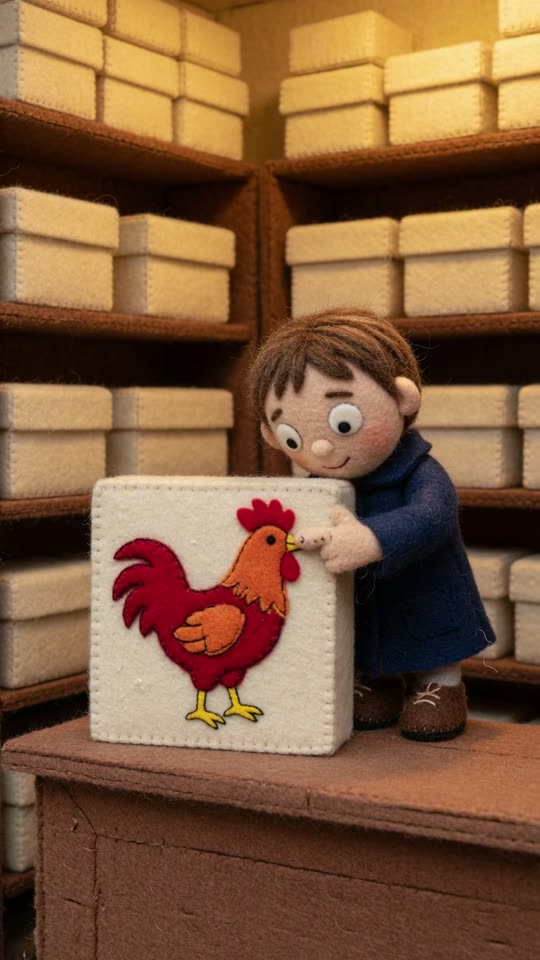
In 1898, the Goelitz Confectionery Company started making the sweet and selling it widely. A confectionery company is one that makes sweets. That family firm still exists today. It is now called the Jelly Belly Candy Company, and it still makes candy corn.
Back then, about half of America's workers lived and worked on farms. Many people thought of corn as food for animals, especially chickens and pigs. So Goelitz made a joke. It sold the candy in boxes with a rooster on the front, under the name Chicken Feed. Farm children saw real chicken feed scattered in the yard every morning. They would have got the joke straight away.
Making candy corn was slow, hard work. The warm sweet mixture was poured by hand into trays of cornstarch. The cornstarch had rows of little kernel-shaped holes pressed into it. Workers called stringers walked along the trays, pouring from buckets. They made three trips, one for each colour. Today machines do the pouring, but the idea is much the same.
For many years, candy corn was a cheap sweet sold all year round. Then trick-or-treating spread across the United States in the late 1940s, after sugar rationing ended. Rationing means people could only buy a small amount. In the 1950s, Halloween became all about sweets, and candy corn became a Halloween favourite.
Today candy corn is one of the best-known Halloween sweets in America. People still argue about it. Some love it, and some say it tastes like sugary candle wax. Either way, each little kernel is a reminder of a time when half the country lived on farms.
Want to know more?The full history, step by step
The story you've heard
Candy corn is one of the most argued-about sweets in America. Some people buy it by the bag every October; others say it tastes of sugary candle wax. But almost everyone recognises the shape: a little triangle striped white, orange and yellow, made to look like a kernel of corn.
The surprising part is the name it once went by. One of the first companies to make it in large quantities sold it as Chicken Feed. It was not food for poultry, of course. It was a joke that a farming country would instantly understand.
Who made the first kernel?
The usual answer is George Renninger, a candy maker at the Wunderle Candy Company in Philadelphia, in the 1880s. The National Confectioners Association credits him, and so do most histories. But it is worth knowing how thin the evidence is. The credit rests largely on the oral tradition of a candy-making family, and National Geographic's history of the sweet admits plainly that nobody knows for sure.
What is better documented is the next step. In 1898 the Goelitz Confectionery Company took up the recipe and began selling the candy widely. That family firm still exists today under another name, the Jelly Belly Candy Company, and it still makes candy corn.
Candy corn belongs to a family of sweets called mellowcreme, with a firm but chewy bite rather like a dense marshmallow. At the time, confectioners were turning out all sorts of farm-shaped novelties for rural children, including tiny pumpkins, chestnuts and turnips. A kernel of corn fitted right in.
Why call it Chicken Feed?
Around the turn of the twentieth century, roughly half of America's workforce lived and worked on farms. Corn was everywhere, but people did not think of it the way we do now. Much of it went to feed animals, especially chickens and pigs, and plenty of Americans saw it as fodder rather than family food.
So the joke wrote itself. Goelitz packed its candy in boxes with a rooster on the front and sold it as Chicken Feed. The Library of Congress notes the cheerful slogan that went with it, which promised something worth crowing for. A child holding that box would know exactly what real chicken feed looked like, scattered across the farmyard every morning, and would enjoy being given a sweet version.
Attitudes to corn shifted over time. The food historian Samira Kawash links wheat shortages during the First World War, around 1917, to Americans becoming more willing to eat corn-based foods themselves. By then the little candy kernel had already found its place in sweet shops.
Made by hand, one colour at a time
Making candy corn was slow, heavy work. The warm candy mixture was poured by hand into trays of cornstarch pressed with rows of kernel-shaped hollows. Workers known as stringers walked along the trays pouring from buckets, and it took three separate passes to build each kernel's white, orange and yellow bands.
Today machines do the pouring, but the basic method of layering three colours into starch moulds has barely changed. The finished kernels are tumbled with an edible confectioner's glaze to give them their shine.
What does it actually taste of? William Kerr, a food scientist at the University of Georgia, describes the flavour as something like buttercream, built on sugar with notes of butter, honey and vanilla. The glaze usually contains wax and mineral oil, and some brands add a little shellac. That waxy finish is exactly what candy corn's critics complain about, and exactly what its fans love.
How it became a Halloween sweet
At first, candy corn was simply a penny sweet, sold all year round and tied, if anything, to the harvest. Its strong link with Halloween came later. Trick-or-treating spread across the United States in the late 1940s, after wartime sugar rationing ended, and as Halloween became more and more about candy in the 1950s, candy corn was ready and waiting. Kawash has found that advertising for it in October rose sharply in that decade.
Today, according to National Geographic, around 35 million pounds are produced each year, much of it for the Halloween season. Whether you love it or hate it, every kernel is a small reminder of a time when half the country woke up to the sound of hens.
Timeline
- 1880sGeorge Renninger of the Wunderle Candy Company in Philadelphia is credited, by oral tradition, with creating candy corn.
- 1898The Goelitz Confectionery Company begins selling candy corn widely, under the name Chicken Feed.
- 1917Wartime wheat shortages help more Americans accept corn-based foods.
- Late 1940sTrick-or-treating spreads after sugar rationing ends.
- 1950sOctober advertising for candy corn rises sharply as Halloween becomes a candy holiday.
Sources
- The Saccharine History of Candy Corn · National Geographic
- The Origins of Halloween Traditions · Library of Congress, Headlines and Heroes
- It's corn! The history of an adored and reviled Halloween candy · University of Georgia CAES Field Report
- How Candy Conquered Halloween · Virginia Postrel (Bloomberg View interview with Samira Kawash)
Spotted something we got wrong? Message us on any of our channels and we'll check it.
Woolly facts
The Goelitz company once sold candy corn in boxes with a rooster on the front, under the name Chicken Feed.
George Renninger, a Philadelphia candy maker, is usually credited with inventing candy corn in the 1880s, but nobody knows for sure.
The company that sold candy corn as Chicken Feed still exists: it is now called the Jelly Belly Candy Company.
Candy corn was first poured by hand, and workers called stringers made three passes to build its white, orange and yellow stripes.
Candy corn is a mellowcreme sweet, with a firm, chewy bite a bit like a dense marshmallow.
A University of Georgia food scientist says candy corn tastes a bit like buttercream, with notes of butter, honey and vanilla.
National Geographic says around 35 million pounds of candy corn are made each year, much of it for Halloween.
Candy corn gets its shine from an edible glaze, which usually contains wax and sometimes a little shellac.