
Sushi has always meant raw fish on rice.
Many people think sushi has always meant raw fish on rice. It has not. Sushi began as fish packed in rice for months to keep it from going bad, and the rice was thrown away. Raw fish on rice is the newest part of the story.
Sushi began as fish fermented in rice to preserve it, and even early Edo nigiri often used cured or cooked fish; raw fish on rice as we know it is the newest chapter.
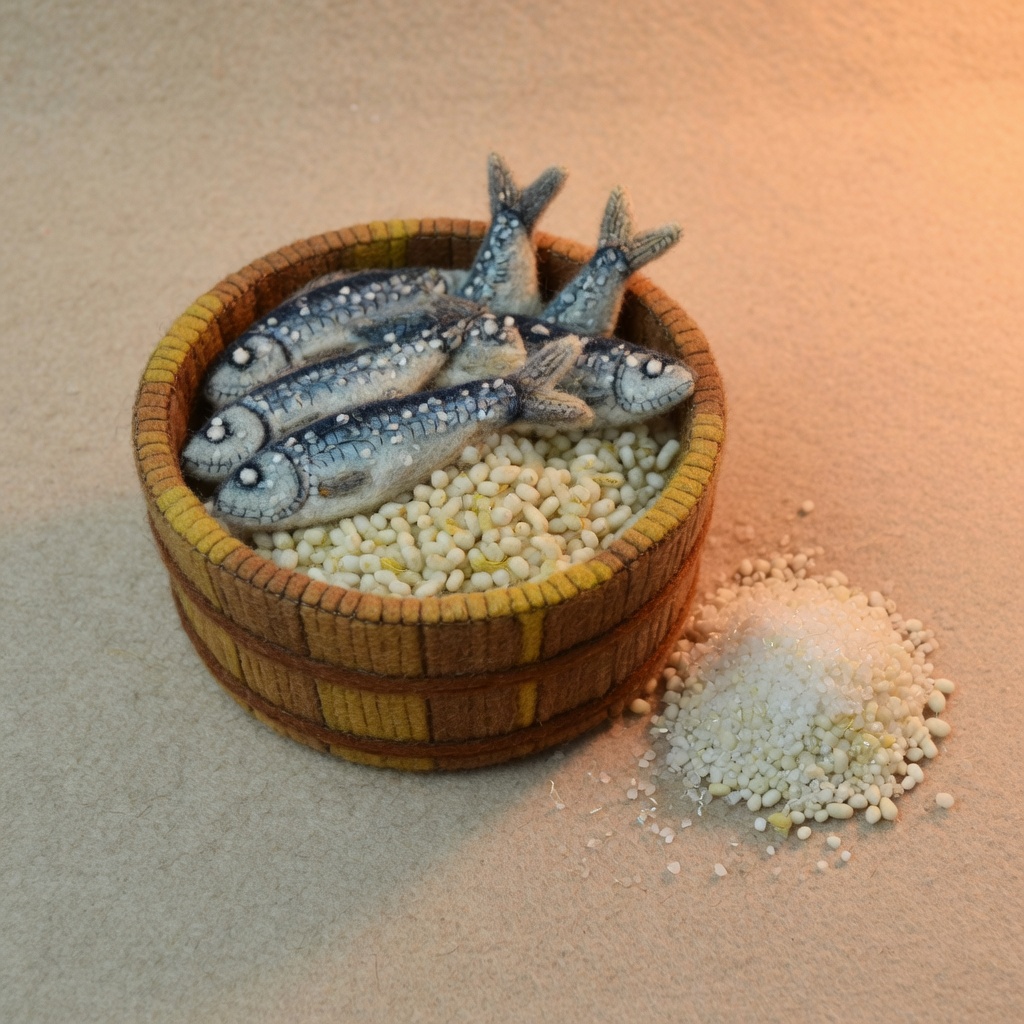
The oldest kind of sushi is called narezushi. It was a way to keep fish from going bad. It probably began in Southeast Asia, though nobody can be sure. The idea spread through southern China and reached Japan along with rice farming.
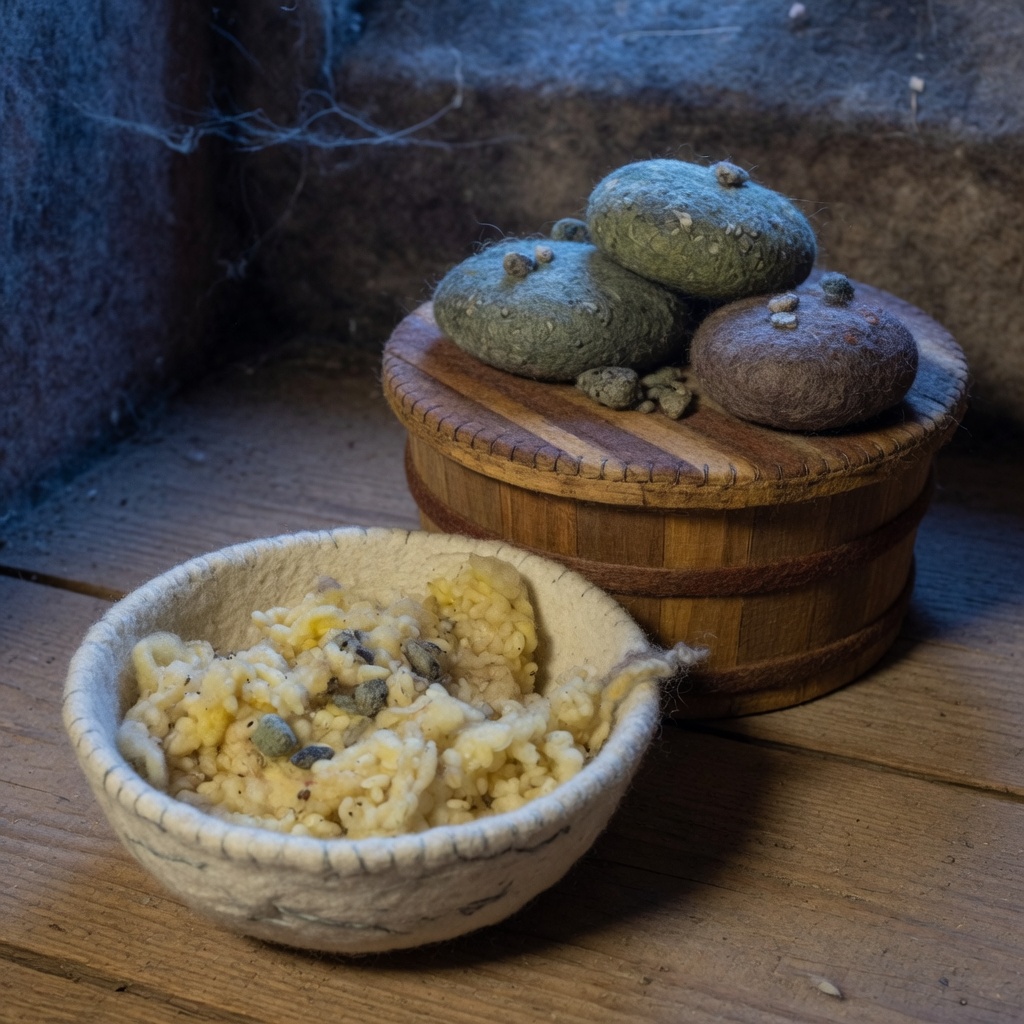
Making narezushi was slow. Cooks salted the fish and packed it tightly with cooked rice in a wooden tub. They pressed it down with heavy stones and left it for months. The rice fermented, which means tiny living things slowly changed it and made it sour. The sourness stopped the fish from rotting. When the tub was opened, people ate the fish. The sour, mushy rice was usually thrown away.
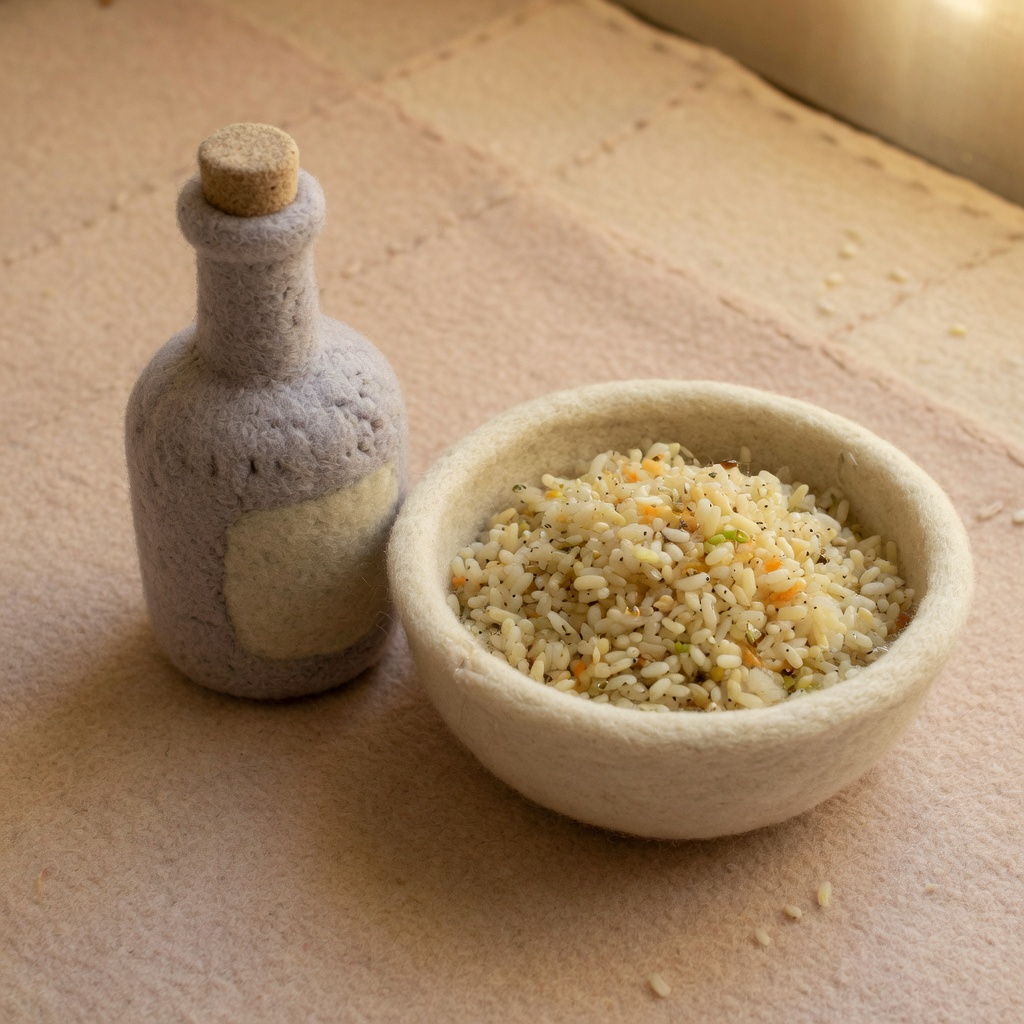
Over hundreds of years, cooks found faster ways. Some let the rice ferment for a shorter time, so it could be eaten too. Later, in the Edo period, cooks began adding vinegar to the rice. Vinegar made the rice sour straight away, so sushi could be made and eaten on the same day.

In the early 1800s, the city of Edo, now called Tokyo, was busy and crowded. Workers wanted quick food. Street stalls began selling a new kind of sushi: a mound of vinegared rice pressed by hand, with a topping on top. This is called nigiri. A chef named Hanaya Yohei is often credited with making it popular around 1824, though dates differ.
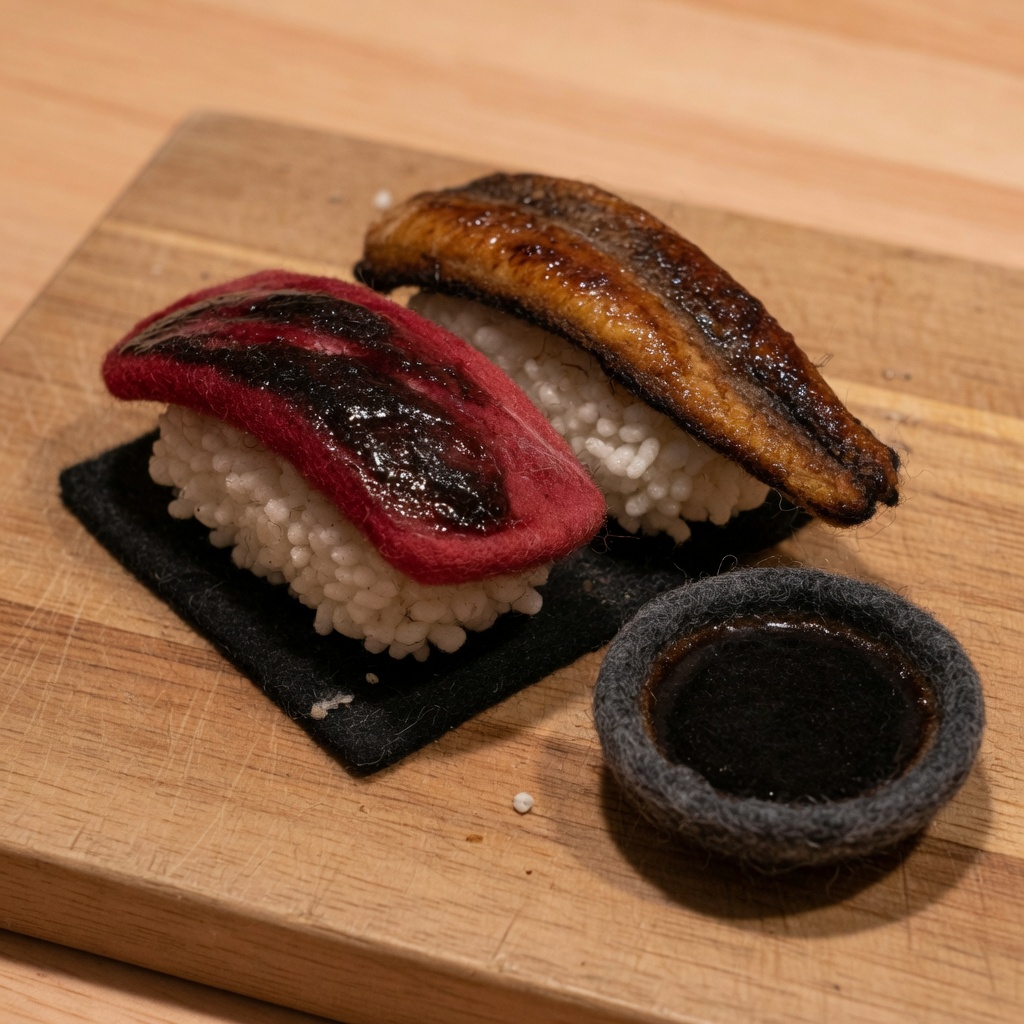
Even then, the fish was often not raw. There were no fridges, so chefs treated the fish to keep it safe. They soaked tuna in soy sauce, cooked eel, and cured fish with salt, vinegar or seaweed. Historians do not fully agree on how much raw fish was used.
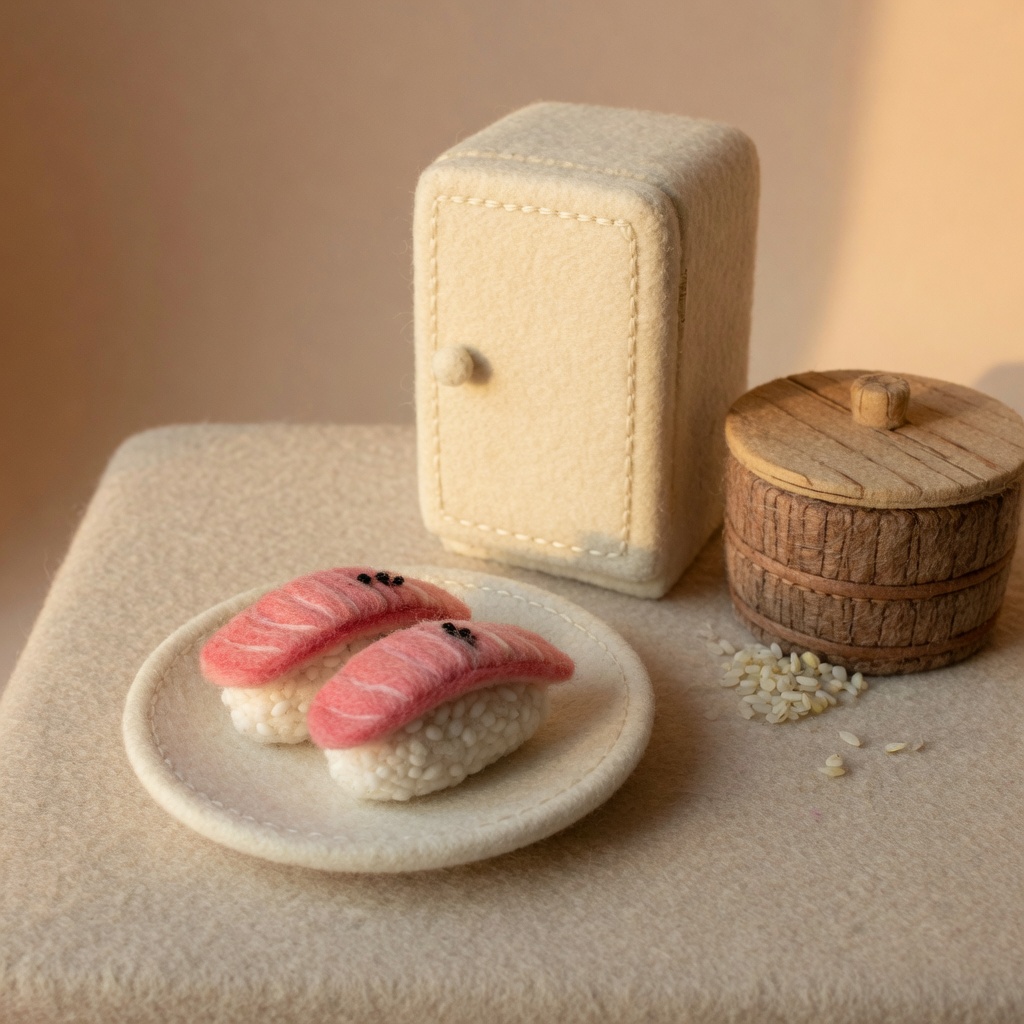
Raw fish on rice became common later, once fridges made it safe. Conveyor-belt sushi began in 1958. So the real heart of sushi is the sour rice.
Want to know more?The full history, step by step
The story you've heard
In many countries, sushi and raw fish are almost the same idea. People who do not like raw fish often say they do not like sushi, and the glistening slice of tuna on a mound of rice has become a symbol of Japanese food around the world.
But sushi is not really defined by raw fish. Strictly speaking, it is about the rice: vinegared rice is the one thing all modern sushi has in common, and some popular kinds have no fish at all. The older story is stranger still. For centuries, the rice was not even eaten.
Fish in a barrel
The earliest ancestor of sushi is called narezushi. It seems to have started as a way of preserving freshwater fish, probably somewhere in Southeast Asia around the great river basins, though historians warn that the exact origin is hard to prove. Similar fermented fish dishes are still made in Thailand and Laos. The method spread through southern China, where a character for this kind of preserved fish appears in records from the second century, and it reached Japan along with wet-field rice farming.
The method was slow. Fish was gutted, salted and packed tightly with cooked rice, often in a wooden tub weighed down with stones, and left for months. As the rice fermented it turned sour, and the acidity kept the fish from spoiling. When the tub was finally opened, the fish was eaten and the rice, by then a sour mush, was usually thrown away. It was a way to keep a big catch through the lean months, not a quick snack.
A version of this survives today around Lake Biwa, near Kyoto, as funazushi, made from a local carp. It can take more than a year to make, has a powerful smell, and many younger Japanese people have never tried it.
Faster and faster
Over the centuries, cooks found ways to speed things up. During the Muromachi period, a shorter ferment called namanare left the rice still edible, so people began eating it along with the fish. Then, in the Edo period, cooks started adding vinegar to the rice instead of waiting for it to sour naturally. This haya-zushi, or fast sushi, turned a preserved food into something that could be made and eaten the same day.
The big change came in Edo, the city now called Tokyo, in the early nineteenth century. The city had frequent fires and constant rebuilding, and its workers wanted quick food. Street stalls sold soba, tempura and a new kind of sushi: a hand-pressed mound of vinegared rice with a topping laid on it, eaten with the fingers. The chef usually credited is Hanaya Yohei, whose shop in Ryōgoku is said to have perfected this nigiri style around 1824, although dates differ and other cooks were doing similar things.
Even then, rarely raw
Without refrigeration, serving fish straight from the market was risky, so Edo sushi chefs became experts in preserving it. Tuna was marinated in soy sauce. Eel was cooked. White fish was cured between sheets of kelp. Some oily fish were salted, vinegared or grilled. The rice was seasoned with red vinegar made from sake lees, and early pieces were two or three times the size of today's.
Historians do not entirely agree on how much raw fish was used in Edo, and some describe raw fish on vinegared rice as part of the city's style. What is clear is that many toppings were treated in some way, and the modern habit of serving lots of raw fish came with better refrigeration in the twentieth century.
On your plate today
The 1923 Great Kantō Earthquake and the hard years after the Second World War scattered Tokyo cooks and spread their style across Japan. Conveyor-belt sushi began in Osaka in 1958, and sushi later travelled the world. So when you pick up a piece of nigiri, look at the rice first. That sour, seasoned rice is the thread running back through more than a thousand years of history.
Timeline
- 2nd century CEA Chinese character for fish preserved this way appears in records.
- 718Japan's Yōrō Code uses the characters later read as sushi, though their exact meaning is uncertain.
- 1336–1573Muromachi period: shorter fermentation lets people eat the rice too.
- Edo periodVinegar replaces long fermentation, creating 'fast sushi'.
- c. 1824Hanaya Yohei is credited with perfecting nigiri at his shop in Ryōgoku, Edo.
- 1923The Great Kantō Earthquake helps scatter Tokyo sushi chefs across Japan.
- 1958Conveyor-belt sushi debuts in Osaka.
Sources
- History of sushi · Wikipedia
- Edomae Style Sushi: A History · PBS SoCal
- Sushi's Epic Journey: From Slow-Fermented Fish to Global Fast Food · Nippon.com
- Edomae sushi: History of Modern Sushi in Ryogoku, Tokyo · The Gate
Spotted something we got wrong? Message us on any of our channels and we'll check it.
Woolly facts
The oldest form of sushi, called narezushi, was fish packed in rice for months; the rice was usually thrown away.
The word sushi is linked to sourness, a reminder that sushi began with sour, fermented rice.
Funazushi, an ancient fermented sushi made from carp near Lake Biwa in Japan, can take more than a year to make.
Early nigiri sushi from Edo, now Tokyo, was two or three times bigger than the pieces served today.
In old Edo, sushi chefs often soaked tuna in soy sauce and cooked eel, because there were no fridges to keep fish fresh.
Conveyor-belt sushi, where plates travel past diners on a moving belt, began in Osaka, Japan, in 1958.
Raw salmon, now a sushi favourite, only became a common sushi topping in Japan in the late 1980s.
Hanaya Yohei, an Edo sushi chef, is often credited with perfecting hand-pressed nigiri sushi around 1824.