Trick-or-treating started with soul cakes given out for the dead.
Souling was an old door-to-door custom in England and other parts of the British Isles. In early November, poor people sang and prayed for the dead in return for small spiced soul cakes. It may be one root of trick-or-treating, but historians do not agree that it is the only one.
Souling for soul cakes was a real door-to-door custom, and it is one likely ancestor of trick-or-treating, but historians do not agree that it is the single origin.
In the Middle Ages, the Church set aside the start of November to remember the dead. All Saints' Day was on 1 November, and All Souls' Day was on 2 November. Together with Halloween, the night before, this season was called Allhallowtide.
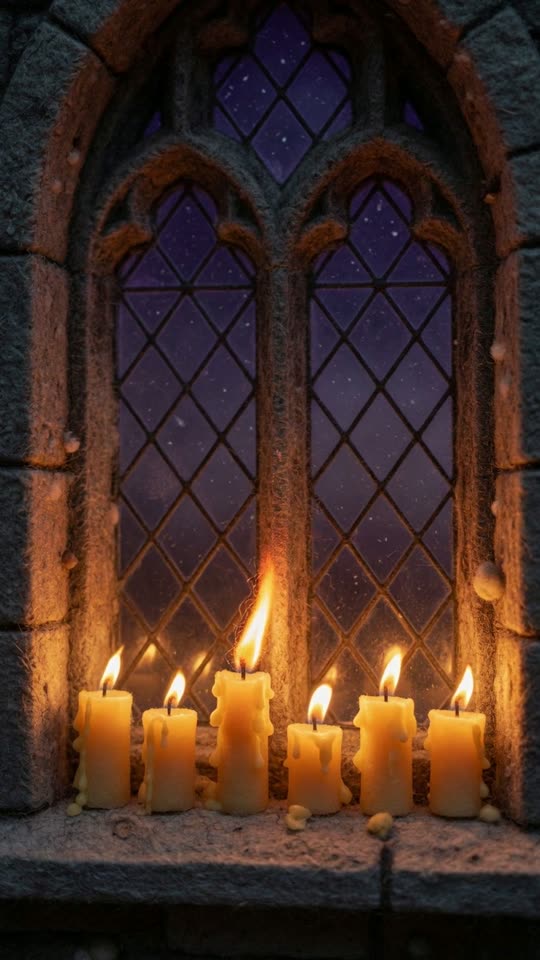
Many Christians believed that the souls of the dead might have to wait in purgatory before reaching heaven. Purgatory was thought of as a place where souls were made clean. People believed that prayers from the living could help those souls on their way.
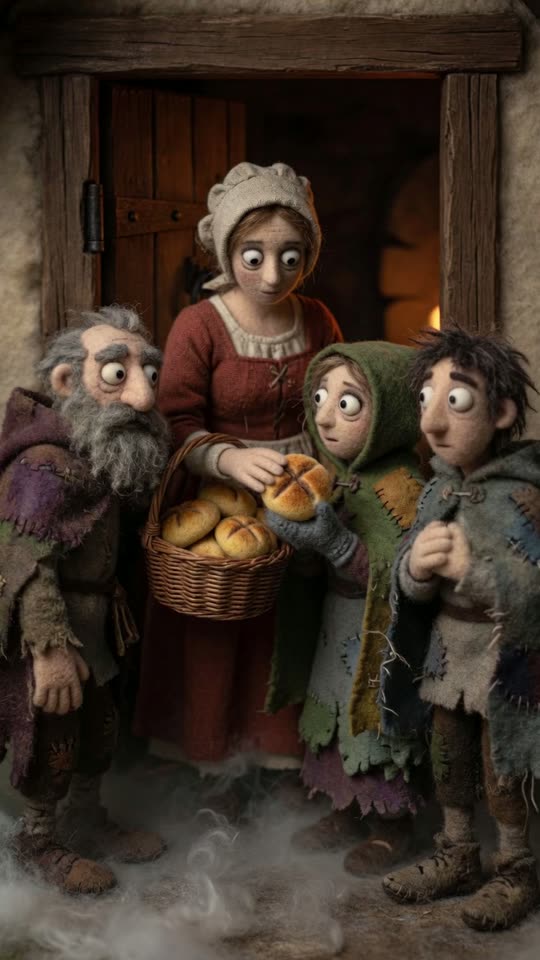
This belief gave rise to souling. Poor people went to the doors of better-off neighbours. They sang, and offered to pray for the family's dead relatives. In return, they were given food, money, ale or a soul cake. The historian Lisa Morton says the earliest report of souling dates from 1511.
Soul cakes were small, round and spiced, more like a biscuit than a fluffy cake. They often had currants or raisins in them. A cross was marked on top, to show they were a gift to the poor. The custom was so well known that Shakespeare joked about it. In a play from the early 1590s, a lovesick man is said to whine like a beggar at Hallowmas.
Souling lasted for centuries. In parts of England it carried on until at least the 1930s. Over time, it became mostly something children did, with songs and treats. Some soulers wore costumes and carried lanterns made from hollowed-out turnips.
So did trick-or-treating come from souling? Perhaps in part. In Scotland and Ireland, people in costume called guisers also went from house to house. They offered songs, jokes or poems in return for food or coins. Modern trick-or-treating probably borrowed from several old customs like these. Historians still argue about which one mattered most.
Want to know more?The full history, step by step
The story you've heard
Every Halloween, children walk from door to door, knock, say a few words and are rewarded with something sweet. It feels like a modern ritual, but people have been doing something remarkably similar at this time of year for at least five centuries.
The custom was called souling, and the treat was the soul cake. It is often described as the origin of trick-or-treating. The truth is a little more tangled, but the story of souling is worth telling on its own.
Prayers at the door
In the medieval Church, the first two days of November were set aside for the dead: All Saints' Day on 1 November and All Souls' Day on 2 November. Together with Halloween, the eve before, they made up a season called Allhallowtide. Many Christians believed that the souls of the dead might wait in purgatory before reaching heaven, and that the prayers of the living could help them on their way.
Souling grew out of that belief. Groups of poorer people, and later mostly children, went to the doors of better-off neighbours. They sang and offered to pray for the souls of the household's dead relatives. In return they were given food, money, apples, ale, or a soul cake. According to the historian Lisa Morton, the earliest report of souling dates from 1511, and the custom was once found throughout the British Isles.
Soul cakes were small and round, closer to a spiced shortbread biscuit than a fluffy modern cake. Recipes used sweet spices such as nutmeg, cinnamon, ginger or allspice, often with currants or raisins, and the top was marked with a cross before baking to show that the cakes were given as charity.
Shakespeare's beggar
The custom was familiar enough that Shakespeare could make a joke about it. In The Two Gentlemen of Verona, written around the early 1590s, the servant Speed teases his lovesick master by listing the signs of a man in love. One of them is whining like a beggar at Hallowmas, the old name for the feast of All Saints.
It is a throwaway line, but it tells us that Elizabethan audiences knew the sight of people asking for alms at Hallowmas, and the plaintive tone in which they did it.
A custom that would not die
Souling outlived the religious upheavals of the following centuries, and in England it was kept up by Protestants and Catholics alike until at least the 1930s. It slowly became more local and more about children, songs and treats. By the late nineteenth century it survived mainly in parts of the English Midlands and the north-west, and in Wales.
By the nineteenth century, some soulers dressed up in costumes and carried hollowed-out turnips with candles inside, said to stand for souls trapped in purgatory. Costumes, lanterns and a knock at the door: it is easy to see why people look here for the roots of Halloween.
In Cheshire, soulers performed short death-and-resurrection plays at farmhouses, with the Old Hob, a horse's head carried on a pole under a sheet. Players at Antrobus still tour local pubs every year between Halloween and mid-November. In Sheffield, children kept up a version known as caking night. Folk song collectors wrote down souling songs in the nineteenth century, and in 1963 the American trio Peter, Paul and Mary recorded a Cheshire version, which brought the tune to a whole new audience.
So is it where trick-or-treating comes from?
Here historians part ways. Souling is clearly one ancestor: door-to-door visits, something given in return for something performed, all at the same time of year. But it is not the only candidate. In Scotland and Ireland, costumed guisers went from house to house offering songs, jokes or poems in exchange for food or coins. In North America, German immigrants brought belsnickeling, in which costumed children visited neighbours at Christmas. And in the early twentieth century, North American children were demanding treats in return for not playing pranks.
Modern trick-or-treating probably borrowed from all of these. The Library of Congress lists several competing theories, and the safest answer is that souling helped shape the habit without being its only root. Soul cakes, meanwhile, are still baked in some English homes every November, ready for anyone who knocks.
Timeline
- 1511The earliest reported souling activity in England, according to historian Lisa Morton.
- Early 1590sShakespeare's Two Gentlemen of Verona jokes about a beggar at Hallowmas.
- 1819George Ormerod publishes a Cheshire souling song.
- 1891A Cheshire souling song is collected from a schoolgirl and published two years later.
- 1963Peter, Paul and Mary record their version, A' Soalin'.
Sources
- Soul cake · Wikipedia
- Souling: the forgotten Halloween tradition · HISTORY UK
- The Two Gentlemen of Verona, Act 2, Scene 1 · Folger Shakespeare Library
- The history of trick-or-treating, and how it became a Halloween tradition · National Geographic
- The Origins of Halloween Traditions · Library of Congress, Headlines and Heroes
Spotted something we got wrong? Message us on any of our channels and we'll check it.
Woolly facts
Soul cakes were small spiced cakes marked with a cross, given to people who prayed for the dead around All Souls' Day.
The earliest report of souling in England dates from 1511, according to the historian Lisa Morton.
In The Two Gentlemen of Verona, Shakespeare jokes that a lovesick man whines like a beggar at Hallowmas.
In Cheshire, soulers performed short plays with the Old Hob, a horse's head carried on a pole under a sheet.
The Antrobus Soul Cakers still perform their souling play in Cheshire pubs every year between Halloween and mid-November.
In 1963, the American folk group Peter, Paul and Mary recorded an old Cheshire souling song as A' Soalin'.
In Staffordshire, soul cakes were also known as soul-mass or somas cakes.
In Portugal, children still go door to door on All Saints' Day collecting Pão-por-Deus, which means bread for God's sake.