
The first jack-o'-lanterns were carved from turnips, not pumpkins.
In Ireland and Scotland, people once carved scary faces into turnips at Halloween and lit them from inside. Irish and Scottish families took the custom to America in the 1800s. There, the bigger pumpkin was much easier to carve, and it took over.
Carved turnip lanterns were a Halloween custom in Ireland and Scotland, and the pumpkin version grew from it in America, though exactly which came first is hard to prove from records.
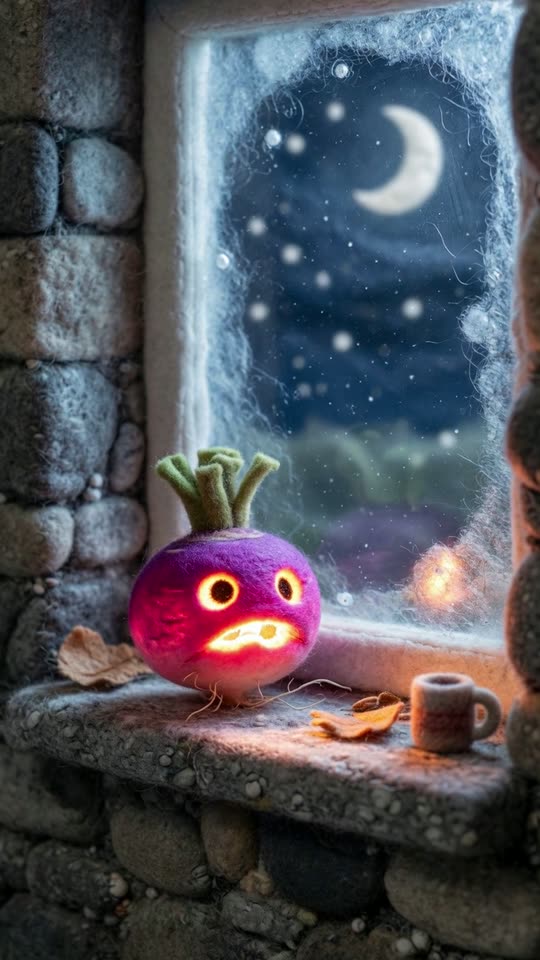
Halloween falls on 31 October. It is linked to Samhain, an old Celtic festival at the end of summer. People believed spirits roamed at that time of year.
In Ireland and Scotland in the 1800s, people carved faces into turnips. They hollowed them out and put a candle or a glowing coal inside. The lanterns sat in windows or were carried along dark lanes. Some people said they scared away spirits.
There was a folk tale to go with them. A sly man called Stingy Jack tricked the Devil. When Jack died, Heaven would not let him in, and neither would the Devil. He was left to wander forever, carrying a coal inside a carved turnip. In some versions, Jack is a clever blacksmith.
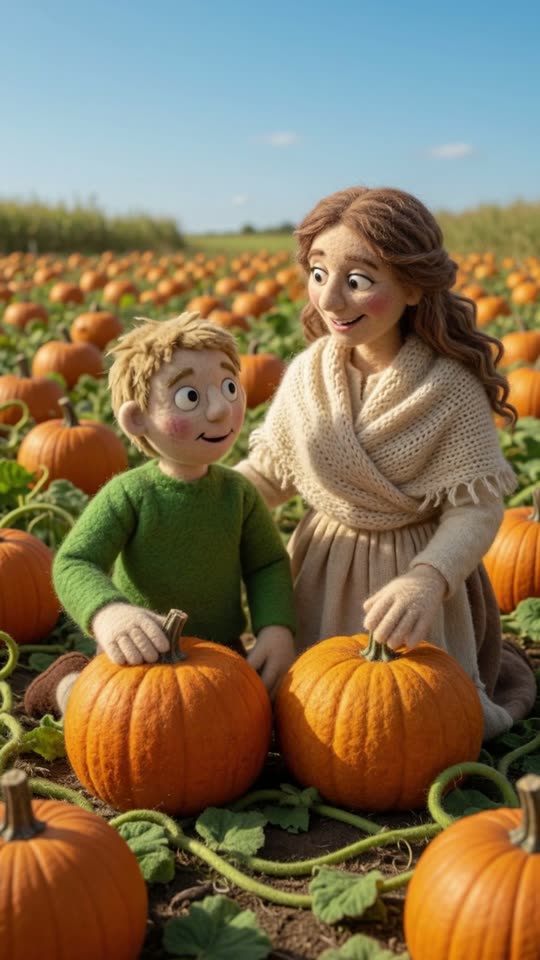
In the 1800s, many Irish and Scottish families moved to North America. They brought their Halloween customs with them. In America they found pumpkins, which are native there. Pumpkins were bigger and softer, so they were much easier to carve.
The pumpkin lantern slowly became the famous symbol of Halloween. Americans already carved pumpkins at harvest time, so the two ideas joined together. By 1866, a Canadian newspaper described pumpkins carved into glowing faces for Halloween.
In Ireland, the National Museum keeps a model of an old turnip lantern from County Donegal. A schoolteacher gave the lantern to the museum in 1943. She said lanterns like it were common near her home around 1900. The museum shows a plaster model, because a real turnip would have rotted long ago. Its face is still spooky today.
Want to know more?The full history, step by step
The story you've heard
Today the jack-o'-lantern means one thing: a big orange pumpkin with a carved grin and a candle flickering inside. It is so closely tied to Halloween that it has become the festival's emblem.
But in Ireland, people will tell you the original was smaller, paler and a good deal more frightening. The first lanterns, the story goes, were carved from turnips. When families crossed the Atlantic, they swapped the turnip for a vegetable they found waiting for them in America.
Turnip lanterns in Ireland and Scotland
Halloween, on 31 October, is linked to Samhain, an old Celtic festival marking the end of summer, when spirits were thought to roam. In the nineteenth century, people in parts of Ireland, Scotland, Wales and England hollowed out turnips or large beets called mangel-wurzels and carved grotesque faces into them.
A candle, or a burning coal, went inside. The lanterns were set in windows or carried through the dark lanes, partly to frighten people and partly, some said, to ward off wandering spirits.
Hollowed turnips had other jobs too. The Irish food historian Máirtín Mac Con Iomaire, of TU Dublin, describes people carrying a glowing sod of turf from a sacred fire home inside a turnip, so they could relight the household fire for luck in the year ahead. The humble root vegetable was a lantern, a carrier and a bit of Halloween magic all at once.
The National Museum of Ireland holds a famous example, known as the Ghost turnip. It was given to the museum in 1943 by Rois Ní Braonáin, a schoolteacher near Fintown in County Donegal, who said lanterns like it were commonly made in her area around 1900. A real turnip would have shrivelled long ago, so what visitors see on display is a painted plaster model, made by the museum artist Eileen Barnes.
Who was Stingy Jack?
The name comes with a folk tale. In the Irish story, a shrewd and stingy man called Jack manages to trick the Devil, more than once, and only lets him go on condition that Jack will never be taken to Hell. When Jack finally dies, Heaven will not let such a rascal in, and the Devil keeps his promise and refuses him too. In some versions, which date back to the eighteenth century, Jack is a lazy but clever blacksmith.
Instead, Jack is sent off into the darkness with a single burning coal to light his way. He puts it inside a hollowed turnip and has wandered the earth ever since. It is a legend, not history: there was no real Stingy Jack, and versions of the tale differ from place to place.
The phrase jack-o'-lantern itself is older than the turnip custom in print. In seventeenth-century England, it could mean a night watchman with a lantern, or the eerie flickering lights sometimes seen over marshes, also called will-o'-the-wisps.
From turnip to pumpkin
In the nineteenth century, many Irish and Scottish people emigrated to North America, taking their Halloween customs with them. There they met the pumpkin, a plant native to the Americas. It was bigger, softer and far easier to hollow out than a hard little turnip.
The National Museum of Ireland describes the modern pumpkin lantern as an American development of the Irish custom. The record is a little more tangled than a simple swap, though. Americans were already carving pumpkins at harvest time, and the earliest recorded use of jack-o'-lantern for a carved vegetable, in 1837, comes from American English. By 1866, a newspaper in Kingston, Ontario, described pumpkins turned into glowing faces for Halloween.
The newcomers also brought other Halloween habits, such as a night of pranks and mischief. By the early twentieth century, the pumpkin face had won. In 1915 the New York Tribune ran a feature calling the jack-o'-lantern the symbol of Halloween in pumpkin country.
On your porch today
If you ever try carving a turnip yourself, you will quickly discover why the pumpkin won: the flesh is hard, the walls are thick and it takes real patience. So the next time you scoop seeds out of a pumpkin, remember the children by the fireside who had to make do with a turnip.
Timeline
- 1660sJack-o'-lantern is used in England for a man with a lantern or for will-o'-the-wisp lights over marshes.
- 1837Earliest recorded use of jack-o'-lantern for a carved vegetable lantern, in American English.
- 1800sCarved turnip and mangel-wurzel lanterns are used at Halloween in Ireland, Scotland, Wales and England.
- 1866A Kingston, Ontario newspaper describes pumpkins carved into glowing faces for Halloween.
- Around 1900Turnip lanterns are commonly made around Fintown, County Donegal.
- 1943The National Museum of Ireland receives the Donegal lantern now shown as the Ghost turnip model.
Sources
- Ghost turnip · National Museum of Ireland
- The Origins of Halloween Traditions · Library of Congress (Headlines and Heroes blog)
- What's on the menu for an Irish Halloween? · RTÉ Brainstorm
- Jack-o'-lantern · Wikipedia
Spotted something we got wrong? Message us on any of our channels and we'll check it.
Woolly facts
Before pumpkins, people in Ireland and Scotland carved Halloween lanterns from turnips and lit them with a candle or a burning coal.
The Ghost turnip at the National Museum of Ireland is a painted plaster model, because a real turnip lantern would have rotted.
In the folk tale, Stingy Jack is turned away from both Heaven and Hell and wanders forever with a coal inside a turnip.
The word jack-o'-lantern was used in 1660s England for a night watchman or for flickering marsh lights called will-o'-the-wisps.
Pumpkins are native to the Americas, and Irish and Scottish immigrants found them much easier to carve than turnips.
In England and Wales, some Halloween lanterns were carved from mangel-wurzels, a kind of large beet.
The first recorded use of jack-o'-lantern for a carved vegetable lantern comes from American English in 1837.
Turnip lanterns were commonly made around Fintown in County Donegal, Ireland, around the year 1900.