There's a Halloween bread in Ireland that predicts your future.
Barmbrack is a sweet Irish fruit bread eaten at Halloween. Small charms used to be baked inside it, and the one in your slice was said to tell your future. Find the ring, and you would marry within a year.
Barmbrack, a speckled fruit loaf, was traditionally baked with small charms inside, and each one foretold something about the year ahead.
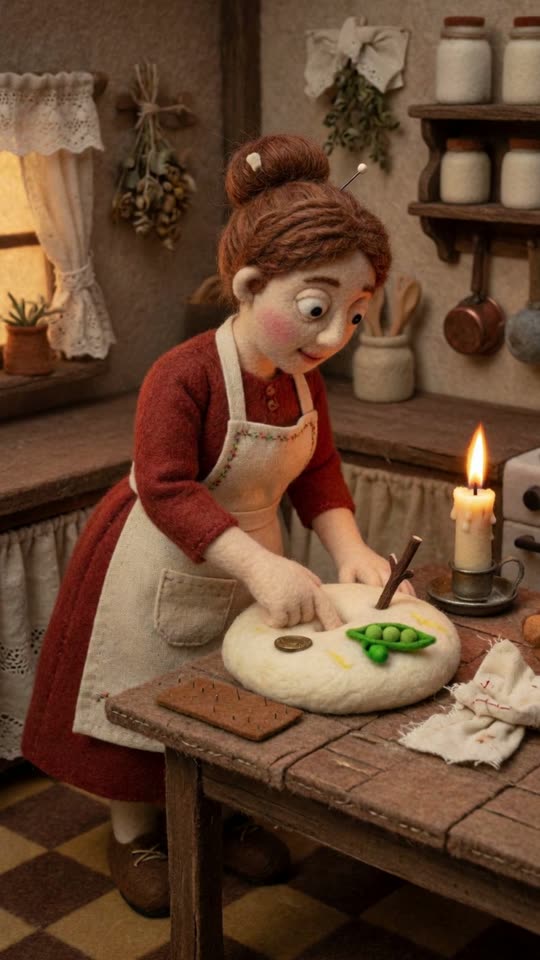
Barmbrack is a round fruit loaf from Ireland. It is full of raisins and sultanas, and it is often toasted and eaten with butter and a cup of tea. Its Irish name, bairín breac, probably means speckled loaf. Speckled means covered in little spots, like the fruit dotted through the bread. Most people just call it brack.
Some people think the 'barm' part has another meaning. Barm is the frothy yeast that forms on beer as it is brewed. Yeast is what makes bread rise. Before baking soda was easy to get in Ireland, bakers often used barm to make their loaves rise.
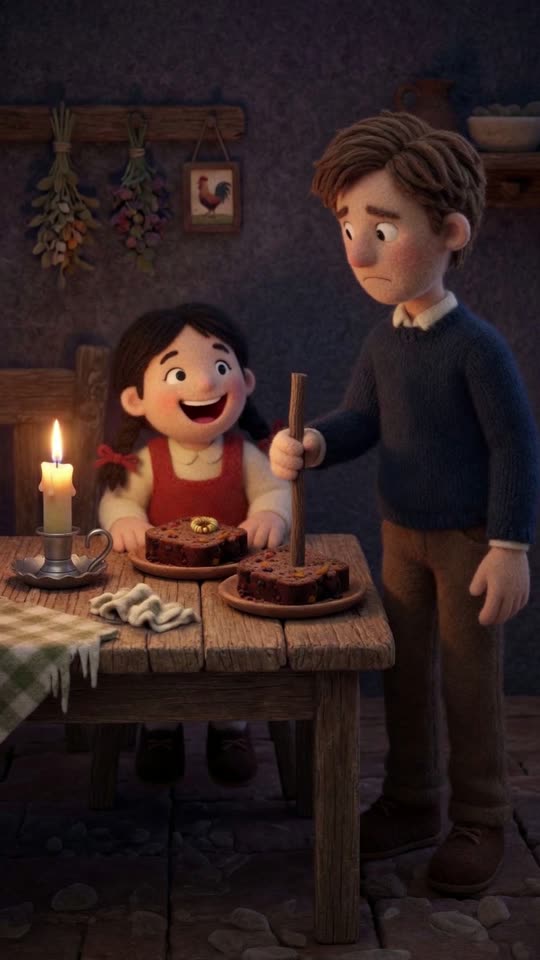
On Halloween night, Irish families ate brack with a surprise inside. Small charms, or lucky objects, were hidden in the dough. Each one was said to tell your fortune for the coming year. The ring was the big one. Whoever found it would be married within the year. A coin meant money or good luck.
Other charms were less welcome. A dried pea often meant no wedding that year, though some said it meant being poor. A small stick meant arguments or an unhappy marriage. A scrap of cloth meant bad luck or hard times. The list changed from family to family and from county to county.
We know about these customs partly thanks to children. In the 1930s, Irish schoolchildren were asked to write down old customs from their families and neighbours. Several wrote about a Halloween brack or cake with a ring inside. Their handwritten pages can now be read online.
Bakeries in Ireland have sold barmbrack since the late 1800s. Shop-bought Halloween bracks still usually hide a small toy ring. The other charms have mostly gone, because of food safety rules. Some families still bake their own with all the charms. If you try it, warn everyone first, and chew carefully.
Want to know more?The full history, step by step
The story you've heard
On Halloween night across Ireland, families have long sat down to a dark, fruity loaf called barmbrack. It looks ordinary enough: a round, glossy bread studded with raisins and sultanas, usually toasted and spread with butter, with a cup of tea alongside.
But hidden in the dough were small objects, and whatever turned up in your slice was said to tell your fortune for the coming year. Find the ring, and you would be married within twelve months. Few loaves have ever carried so much suspense.
A speckled loaf
The name comes from the Irish bairín breac, usually translated as speckled loaf, because of the dried fruit scattered through it. Most people simply call it brack. There is another theory about the first half of the word: barm is the frothy yeast skimmed from fermenting ale, once used to make bread rise, and some think the loaf took its name from that instead.
That second theory is plausible. Before bicarbonate of soda became widely available in Ireland in the early nineteenth century, yeasty barm from brewing was one of the main ways to make a loaf rise, so a bread named after it would make good sense. Today, many recipes use baking powder instead.
Barmbrack sits somewhere between bread and cake. It is sweeter than a sandwich loaf but less rich than a fruit cake, and in many recipes the fruit is soaked overnight in cold tea, which keeps it plump and moist. It was eaten at other times of year too, but Halloween was its great night.
What the charms meant
The list of charms varied from family to family and county to county, and so did their meanings, which is part of the fun. The most widely agreed is the ring: whoever found it would be wed before the year was out. A coin, traditionally a silver sixpence, meant good fortune or wealth.
The others were less welcome. A dried pea is usually said to mean you would not marry that year, although some sources record it as a sign of poverty instead. A small stick foretold an unhappy marriage or endless quarrels. A scrap of rag or cloth meant bad luck or hard times. Some households added a bean, a thimble, which warned an unmarried girl she would stay single, or a small religious medal, said to point towards life as a priest or nun.
The same fortune-telling turned up in other Halloween dishes. Colcannon, mashed potato mixed with kale or cabbage, was a traditional Halloween supper from at least the eighteenth century, and it too might hide a ring, a coin, a stick or a rag.
How we know
Much of what we know comes from ordinary people writing down what they remembered. In the 1930s the Irish Folklore Commission asked schoolchildren to collect customs from their parents, grandparents and neighbours. Their handwritten pages, now online through the Dúchas project, are full of Halloween.
One pupil at Gurteen school in County Longford, recording what a Mrs Coughlan told them, described a brack baked for supper with a ring inside, and explained that whoever found it was expected to marry within twelve months. The same page describes another fortune-telling game with three saucers holding clay, water and a ring, standing for an early death, a journey overseas and a wedding. In County Cavan, a pupil wrote in November 1937 about a Halloween cake with a ring in the middle, cut up and shared round the table.
Barmbrack also shows up in Irish literature. James Joyce mentions barmbracks in Clay, one of the stories in Dubliners, set on Halloween.
On your plate today
Bakeries in Ireland have sold barmbrack since the late nineteenth century, and shop-bought bracks made for Halloween still usually contain a ring, typically a small toy one. Food safety rules mean the other charms have mostly disappeared from commercial loaves, so most people now get only the marriage question, not the warnings about sticks and rags.
Some families still bake their own and add the full set. If you try it at home, wrap each charm in greaseproof paper, tell everyone at the table, and chew slowly. The future can wait a few seconds.
Timeline
- Mid-1700sColcannon becomes a traditional Halloween supper in Ireland, sometimes with charms hidden inside.
- Late 1800sCommercial barmbrack goes on sale in Ireland.
- 1914Joyce's Dubliners, including the Halloween story Clay, is published.
- 1937Irish schoolchildren record Halloween brack and ring customs for the Schools' Collection.
- TodayShop-bought Halloween bracks still usually hide a ring.
Sources
- Your guide to the foods associated with Halloween in Ireland · RTÉ Brainstorm (Máirtín Mac Con Iomaire, TU Dublin)
- Barmbrack · Wikipedia
- Halloween, Gurteen, Co. Longford · Dúchas, The Schools' Collection
- Halloween Customs, Cullies, Co. Cavan (1937) · Dúchas, The Schools' Collection
Spotted something we got wrong? Message us on any of our channels and we'll check it.
Woolly facts
Barmbrack's Irish name, bairín breac, probably means speckled loaf, because of the dried fruit dotted through it.
Shop-bought Halloween barmbracks in Ireland still usually hide a small toy ring, said to mean a wedding within the year.
In an Irish Halloween barmbrack, finding a dried pea in your slice was often said to mean no wedding that year.
A stick hidden in a Halloween barmbrack was said to warn of arguments or an unhappy marriage.
Some Irish families hid a thimble in their Halloween barmbrack, which warned an unmarried girl that she would stay single.
In many barmbrack recipes, the dried fruit is soaked overnight in tea, which keeps it plump and moist.
James Joyce mentions barmbracks in Clay, a Halloween story in his 1914 book Dubliners.
Colcannon, mashed potato mixed with kale or cabbage, was another Irish Halloween dish that could hide a coin, a stick or a rag.