Pumpkin spice has pumpkin in it.
Many people think pumpkin spice has pumpkin in it. It doesn't. Pumpkin spice is a mix of warm spices, like cinnamon, nutmeg and ginger, that cooks put in pumpkin pie.
Pumpkin spice is a blend of warm spices for flavouring pumpkin pie; the spice mix itself contains no pumpkin at all.
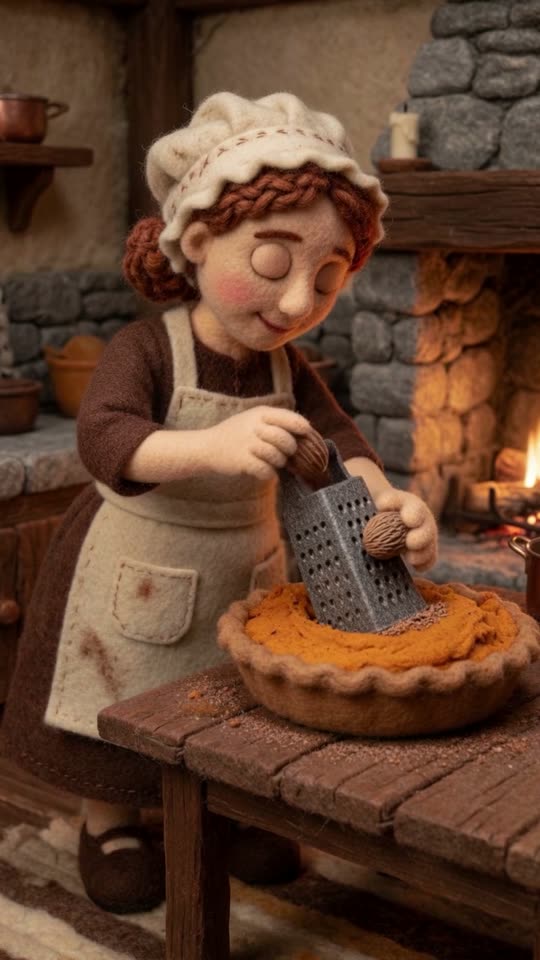
Pumpkin pie is an old American dish. In 1796, Amelia Simmons wrote a cookbook called American Cookery. It was printed in Hartford, Connecticut. It had two recipes for pumpkin pie, which she spelled 'pompkin'. She flavoured them with mace, nutmeg, ginger and allspice. Mace is the lacy red coat that grows around a nutmeg seed.
Over the next hundred years, cooks added cinnamon to the pie. Recipes slowly settled on a set of warm spices: cinnamon, ginger, nutmeg, and cloves or allspice. None of them come from a pumpkin. Cinnamon is the bark of a tree. Nutmeg is a seed, and ginger is a root.
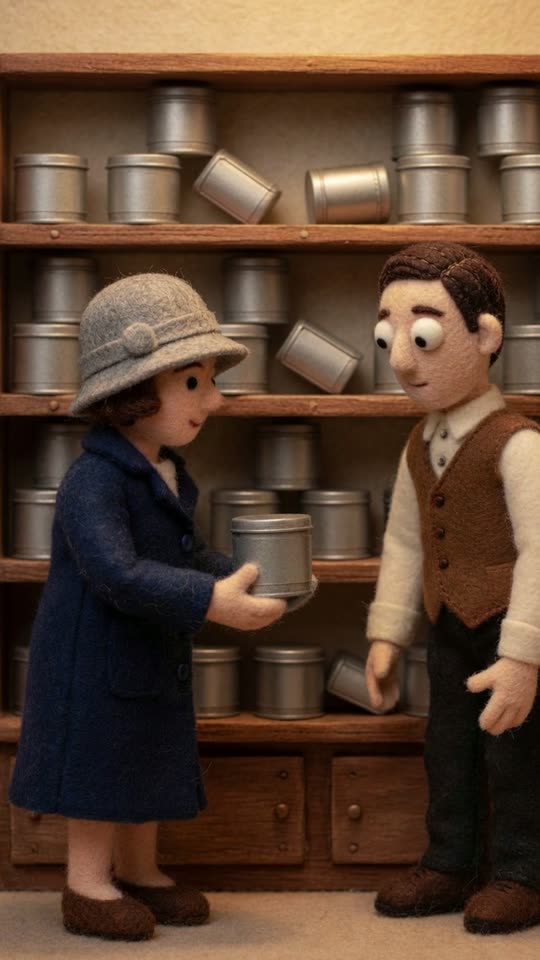
Buying and measuring lots of little jars was a bother. So the American spice company McCormick began selling the spices already mixed together in one tin. The company says this started in 1934. It called the blend, or mix, pumpkin pie spice. The name told you what to use it for, not what was inside.
In 2003, a team at Starbucks in Seattle had a new idea. The team was led by Peter Dukes. They wanted a coffee drink that tasted like pumpkin pie. To get it right, they ate bites of pie between sips of coffee. The new Pumpkin Spice Latte was tested in about 100 shops. In 2004 it went on sale across the United States.
The drink was a huge hit, and 'pumpkin spice' became the taste of autumn. Now the name turns up on biscuits, candles and even shampoo. Here is a twist. For its first 12 years, the latte had no real pumpkin in it at all. In 2015, Starbucks added some pumpkin to its sauce. But the spice sprinkled on top is still just spice.
Want to know more?The full history, step by step
The story you've heard
Pumpkin spice has become the unofficial flavour of autumn. It appears on coffee-shop menus as soon as the leaves start to turn, and from there it spreads to biscuits, crisps, candles and even shampoo. With a name like that, it is easy to assume there is a bit of pumpkin hiding in every jar.
There isn't. Pumpkin spice is named after what it was made for, not what it is made of. It is the seasoning cooks add to pumpkin pie, and on its own it tastes of the pie's spices rather than the vegetable. Pumpkin itself is fairly mild; it is the spice that gives the pie its warm, cosy smell.
What is actually in the tin
Blends vary from brand to brand and kitchen to kitchen, but the usual cast is cinnamon (the bark of a tropical tree), nutmeg (a seed), ginger (a root) and either cloves or allspice (dried flower buds and dried berries). McCormick, the American spice company that popularised the ready-made mix, currently lists cinnamon, ginger, nutmeg and allspice on its own pumpkin pie spice, with no cloves. Many home recipes add cloves instead, which is why both turn up in descriptions of the flavour.
None of these spices grow anywhere near a pumpkin patch. Cinnamon, nutmeg and cloves came originally from South and South-East Asia, and allspice from the Caribbean and Central America. The blend is a little map of centuries of spice trading, all brought together to season a squash native to the Americas.
Where the idea came from
Spiced pumpkin pies are old. In 1796 a cookbook called American Cookery, written by Amelia Simmons and printed in Hartford, Connecticut, gave two recipes for what she spelled 'pompkin'. One version mixes stewed pumpkin with cream, eggs and sugar and seasons it with mace, nutmeg and ginger. The other uses milk and molasses with allspice and ginger. Both are baked in a pastry crust.
So the idea of a warm-spiced pumpkin pie was already in print in the 1790s, though Simmons's spices were not quite today's line-up. Her recipes have no cinnamon and no cloves, and she gives no measurements for the spices at all; the cook was trusted to season to taste. Over the following century, cinnamon became a standard part of the pie, and recipes settled into something close to the modern mix.
The next step was convenience. McCormick says its pumpkin pie spice has been on sale since 1934, which saved home bakers from buying and measuring several separate jars. Once the blend existed under a single name, it was only a matter of time before people started putting it into things that were not pies.
From pie to latte
The big leap came in 2003. At Starbucks' headquarters in Seattle, a team led by Peter Dukes, then a product manager in the espresso department, began testing a pumpkin pie latte. According to an account in Seattle Met magazine, the idea did poorly in an early customer survey, and staff tasted forkfuls of pumpkin pie alongside sips of espresso to work out which flavours suited coffee. Names such as 'fall harvest latte' were considered before they settled on Pumpkin Spice Latte.
The drink was tested in about 100 shops in Vancouver and Washington, DC, in the autumn of 2003, then launched across the United States the following year. It became the company's best-known seasonal drink, and the phrase 'pumpkin spice' escaped from the kitchen cupboard into everyday language.
Here is a twist worth knowing. For its first dozen years, that latte contained pumpkin flavouring but no actual pumpkin. In August 2015, Starbucks changed the recipe so that its sauce included real pumpkin, and dropped caramel colouring. So a pumpkin spice latte today may contain a little pumpkin, but that pumpkin is added separately. The spice blend sprinkled on top is still just spice.
Why the name fools us
Our brains link smells with memories, and for many people in North America those spices mean pies at family gatherings, cold mornings and falling leaves. Calling the blend 'pumpkin' spice borrows that whole feeling. It is the same trick as 'apple pie spice' or 'mulled wine spice': the name describes the occasion, not the ingredients.
Next time you make a pumpkin pie, try mixing your own: a good spoonful of cinnamon, a little ginger, a grating of nutmeg and a pinch of cloves or allspice. Then taste it on its own. You will be eating pumpkin spice, and there will be no pumpkin in sight.
Timeline
- 1796Amelia Simmons's American Cookery prints two 'pompkin' pie recipes seasoned with mace, nutmeg, ginger and allspice.
- 1934McCormick's pumpkin pie spice goes on sale, according to the company.
- 2003Starbucks develops the Pumpkin Spice Latte and tests it in about 100 shops.
- 2004The latte launches across the United States.
- 2015Starbucks adds real pumpkin to the latte's sauce and drops caramel colouring.
Sources
- American Cookery, by Amelia Simmons (1796) · Project Gutenberg
- McCormick Pumpkin Pie Spice · McCormick
- Starbucks' Pumpkin Spice Latte and Its Unlikely Triumph · Seattle Met
- Starbucks' Pumpkin Spice Latte will now contain actual pumpkin · Fortune
- The First Recipe for 'Pompkin' Spice Dates Back to 1796 · Mental Floss
Spotted something we got wrong? Message us on any of our channels and we'll check it.
Woolly facts
Pumpkin spice has no pumpkin in it: it is a mix of spices such as cinnamon, nutmeg, ginger, and cloves or allspice.
Pumpkin spice got its name because cooks used it to flavour pumpkin pie, not because it is made from pumpkin.
Amelia Simmons's 1796 cookbook American Cookery spelled pumpkin pie as 'pompkin' and spiced it with mace, nutmeg and ginger, but no cinnamon.
McCormick says it has sold ready-mixed pumpkin pie spice in a single tin since 1934.
Nutmeg and mace come from the same fruit: nutmeg is the seed, and mace is the lacy red coat around it.
Before it became a hit, the Starbucks Pumpkin Spice Latte idea did poorly in an early customer survey.
For its first 12 years, the Starbucks Pumpkin Spice Latte had no real pumpkin in it; pumpkin was added to the sauce in 2015.
Starbucks trademarked PSL, the nickname for its Pumpkin Spice Latte, in 2013.