Fish and chips started as two separate foods.
Fish and chips began as two separate foods. Fried fish came to England with Sephardic Jewish families, and chips were a cheap snack of their own. Shops started selling them together around the 1860s.
Fried fish came to Britain with Sephardic Jewish families and chips were a separate cheap snack; shops only paired them from around the 1860s.
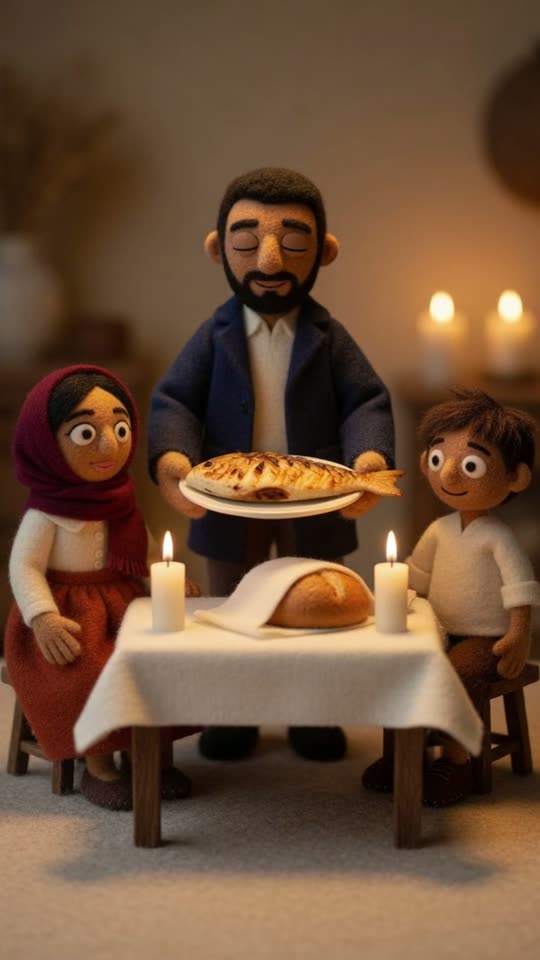
In the 1490s, Jewish people were forced to leave Spain and Portugal. They were Sephardic Jews, the Jews of that part of Europe. Some of their families later settled in England, often after living in Holland. They brought their recipes with them.
One favourite was fish coated in flour or batter and fried in oil. It was perfect for the Sabbath, the Jewish day of rest, when cooking is not allowed. Fish fried on Friday could be eaten cold on Saturday. The coating helped keep it moist.
Over time, English people came to know the dish well. In 1845, the famous chef Alexis Soyer printed a recipe for fried fish in the Jewish style. By then, fried fish was a London street food. Sellers walked around with trays of it hung from their necks. Charles Dickens even mentions a fried fish shop in Oliver Twist.
Chips have a separate story. Nobody is sure who first fried strips of potato. France and Belgium both claim them. By the mid-1800s, chips were a cheap, filling food in the factory towns of northern England.
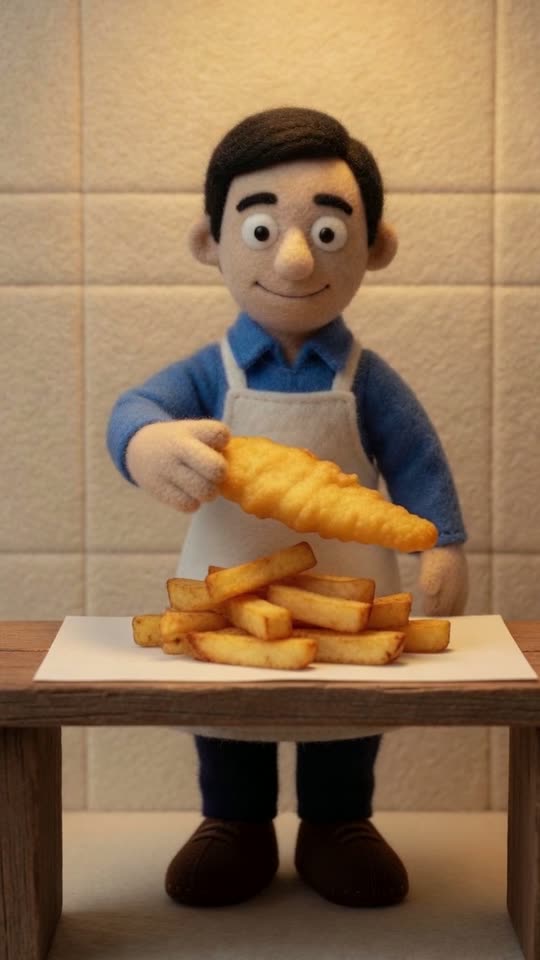
Then, in the 1860s, shops began selling the two together. Two names usually come up. Joseph Malin, a young Jewish immigrant, opened a shop in London's East End around 1860. John Lees was selling fish and chips from a wooden hut on Mossley market, in Lancashire, by 1863. Some local historians say Malin sold only fish at first, so Lees was really first. Nobody can be completely sure.
New steam fishing boats and railways soon brought cheap fish to every town. Fish and chip shops spread fast. The meal was so important that it was never rationed in either world war. Today the UK has more than 10,000 fish and chip shops.
Want to know more?The full history, step by step
The story you've heard
Fish and chips feels as old as the British seaside: hot, salty, soused in vinegar and eaten out of paper on a windy promenade. It is easy to imagine it has always been a single dish, invented in one go somewhere in England.
In fact the two halves have quite separate histories. The fish arrived first, and it came with refugees.
The fish: a Sephardic Sabbath dish
In the 1490s, Jewish people were expelled from Spain and then from Portugal. Many Sephardic Jews, the Jews of the Iberian Peninsula, moved north, and some reached England from the sixteenth century onwards, often by way of Holland. They brought their cooking with them.
One favourite was fish coated in flour or batter and fried in oil. It made perfect sense for the Sabbath, when observant Jews do not cook: fish fried on Friday could be eaten cold the next day, and the coating helped keep it moist. The Jewish Telegraphic Agency, drawing on Claudia Roden's Book of Jewish Food, notes that crypto-Jews hiding their faith in Catholic lands also had a reason to fry fish on Fridays, the Church's meatless day.
The dish became well known in England. History Hit points to a 1781 British cookbook describing the Jewish way of preserving fish, and Thomas Jefferson wrote of eating fish in the Jewish fashion after a visit. In 1845 the celebrity chef Alexis Soyer printed a recipe for fried fish, Jewish fashion, noting that it was cooked in oil rather than meat fat.
Onto the streets, and the chips arrive
By the nineteenth century fried fish was a London street food. Charles Dickens mentions a fried fish warehouse in Oliver Twist, published in instalments in 1837 to 1839. History Hit describes sellers hawking pieces from trays hung around their necks.
Chips are harder to pin down. Belgium and France both claim the fried potato. What we do know is that by the mid-1800s fried potatoes were a cheap, filling food in the industrial towns of the north of England, and Dickens again helps: A Tale of Two Cities, from 1859, mentions husky chips of potato fried in a little oil.
Then, in the 1860s, someone had the obvious idea of selling the two together. Two names usually come up. In London, Joseph Malin, a young Ashkenazi Jewish immigrant, opened a shop in the East End around 1860; it is said to have traded until the 1970s. In Lancashire, John Lees ran a wooden hut on Mossley market by 1863, later moving to a shop over the road. Some sources even give Malin's date as 1863.
Who was really first?
Honestly, nobody can be certain. Local historian Rita Vaughan's research, reported by the Tameside Correspondent in 2023, argues that Malin sold only fried fish at first, and that Lees was the first to serve the two together. Census records suggest Lees ran his stall part-time while working in the cotton industry. Oldham's Tommyfield Market, meanwhile, claims to be where chips were first sold, also around 1860.
What both stories agree on is that the combination is Victorian, and that the fish part was already someone else's recipe. Steam trawlers and the new railways then did the rest, bringing cheap fish from the North Sea and beyond to every industrial town. Historic UK notes that shops were often family businesses run from a front room, and by the late 1800s they were everywhere.
On your plate today
Fish and chips became so important that it stayed off the ration list in both world wars, a way of keeping spirits up on the home front. Today there are more than ten thousand fish and chip shops across the UK.
The numbers are still enormous. History Hit, citing industry figures, says Britons buy around 382 million meals from chip shops each year, including about 167 million portions of fish and chips, roughly three helpings for every person in the country. Chip shops are said to sell about a quarter of all the white fish eaten in the UK, and a tenth of all the potatoes. The Friday habit itself has older roots still, in the Christian custom of eating fish rather than meat at the end of the week.
So next Friday, as you shake on the salt, remember the Sephardic families who fried their fish for the Sabbath, and the northern potato fryers who gave it a partner.
Timeline
- 1490sJews are expelled from Spain and Portugal; some Sephardic families later settle in England.
- 1781A British cookbook describes the Jewish way of preserving fish.
- 1837–1839Dickens mentions a fried fish warehouse in Oliver Twist.
- 1845Alexis Soyer prints a recipe for fried fish, Jewish fashion.
- c. 1860Joseph Malin opens a fried fish shop in London's East End.
- 1863John Lees is selling fish and chips from a hut on Mossley market, Lancashire.
Sources
- Britain's Favourite: Where Were Fish and Chips Invented? · History Hit
- Fish and chips' surprising Jewish history · Jewish Telegraphic Agency
- The History of Fish and Chips · Historic UK
- Mossley's claim to oldest chippy backed up by new research · Tameside Correspondent
Spotted something we got wrong? Message us on any of our channels and we'll check it.
Woolly facts
Fried fish came to England with Sephardic Jewish families, who fried it on Friday so it could be eaten cold on the Sabbath.
Fish and chips stayed off the ration list in both world wars, helping to keep spirits up on the home front.
In 1845, the celebrity chef Alexis Soyer printed a recipe for 'fried fish, Jewish fashion', cooked in oil.
Charles Dickens mentions a 'fried fish warehouse' in Oliver Twist, written in the late 1830s.
Joseph Malin and John Lees both claim the first fish and chip shop, one in London and one in Lancashire, both in the 1860s.
By 1910, there were around 25,000 fish and chip shops in the UK.
In 1931, one fish and chip shop in Bradford got so busy that it hired a doorman to manage the queue.
UK chip shops sell about a quarter of all the white fish eaten in Britain, and around a tenth of all the potatoes.