Bobbing for apples was a way to find out who you'd marry.
Bobbing for apples is a game where you try to catch an apple with your teeth. In Ireland, Scotland and England, it was once also a love test on Halloween night. The first person to bite an apple, people said, would be the next to marry.
In Ireland, Scotland and England, apple games on Halloween night were bound up with fortune-telling about love and marriage, alongside plain fun.
Long ago in Ireland, Scotland and England, Halloween was a night for fortune-telling. Fortune-telling means trying to find out what will happen in the future. Young people who were not yet married mostly wanted to know one thing. Who would they marry, and when?
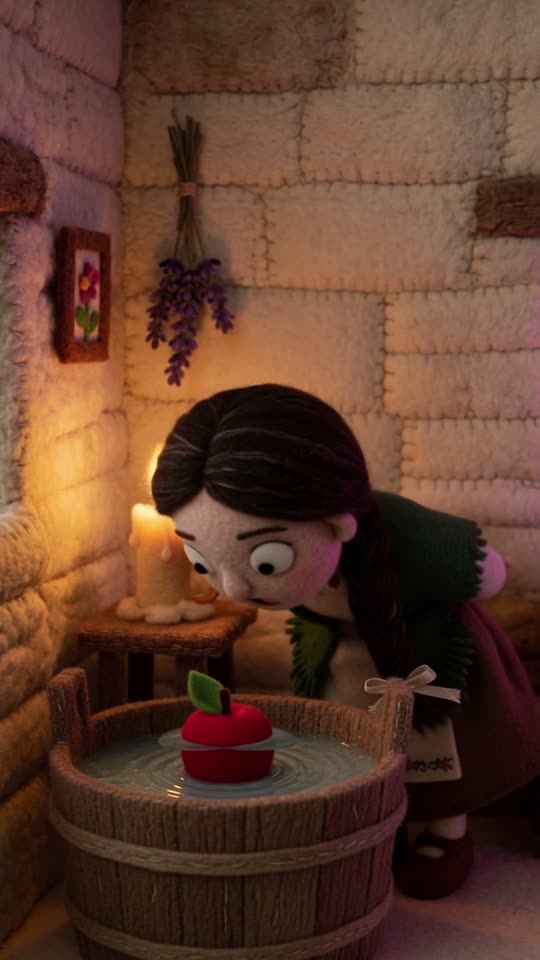
Apples were perfect for these games. They are picked in autumn, so there were plenty of them. In one game, apples floated in a tub of water. Players kept their hands behind their backs and tried to catch one with their teeth. In Scotland this is called dooking, which means ducking. In another game, apples hung on strings from a beam. In Ireland, that game gave Halloween a nickname: Snap-Apple Night.
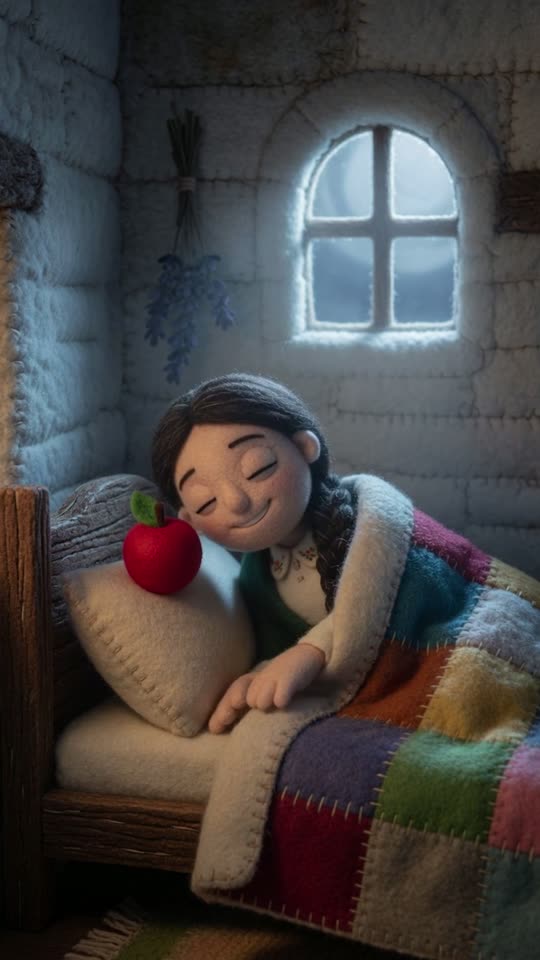
The saying went that the first person to bite an apple would be the next to marry. A young woman who caught an apple might sleep with it under her pillow. She hoped to dream of her future sweetheart. In another trick, you peeled an apple in one long, unbroken strip. The shape the peel made was said to show the first letter of your true love's name.
Writers recorded these games. In the 1700s, an Irish scholar named Charles Vallancey described apple bobbing and apples on strings. In 1786, the Scottish poet Robert Burns published a long poem called Halloween. It shows young Scots telling fortunes with kale, nuts and apples.
In 1832, the Irish painter Daniel Maclise went to a Halloween gathering at Father Horgan's house in Blarney, near Cork. Back in London, he turned it into a big painting called Snap-Apple Night. It was shown at the Royal Academy in 1833. The painting is crowded with people playing Halloween games. Some of them are real people Maclise knew.
Irish and Scottish families later took the games to North America. Over time, bobbing for apples turned into a children's party game. Today, few people think about weddings when they dunk their face in the bowl. But for hundreds of years, that tub of apples was a way to ask about love.
Want to know more?The full history, step by step
The story you've heard
Bobbing for apples looks like the simplest game in the world. Fill a tub with water, float some apples in it, put your hands behind your back and try to catch one with your teeth. Everyone gets wet, everyone laughs, and that is the point.
But for a long time the game had a second meaning. On Halloween night, young unmarried people played it to peek into the future. The first to bite an apple, the saying went, would be the next to marry.
A night for fortune-telling
Halloween, the eve of All Saints' Day on 1 November, was traditionally a night when the ordinary rules seemed loosened and the future could be glimpsed. In Ireland, Scotland and parts of England, it was packed with small divination games, and most of them asked about love.
Robert Burns's long poem Halloween, first published in the Kilmarnock edition of his poems in 1786, is one of the richest records. It describes young Scots pulling kale stalks to learn what kind of partner they would have, putting pairs of nuts in the fire to see whether a romance would burn steadily or fly apart, and eating an apple in front of a mirror to catch a glimpse of a future spouse. A Victorian historian later called the poem a kind of textbook of country customs.
Apples turned up again and again. They were plentiful at harvest time, cheap and good to eat, and they were easy to turn into a game. An eighteenth-century account of Ireland by the antiquarian Charles Vallancey already describes both bobbing in water and biting at an apple on a string.
Tubs, strings and pillows
There were two main versions. In one, apples floated in a tub or basin of water and players knelt round it, trying to lift one out with their mouths. In Scotland this is called dooking, from a word meaning ducking. In the other, apples hung from strings tied to a beam or the ceiling, and players lunged at them with their hands behind their backs. In Ireland, this version gave the whole evening a name: Snap-Apple Night.
Some customs went further. A young woman who caught an apple might sleep with it under her pillow, hoping to dream of her future sweetheart. Another popular trick was to peel an apple in one long, unbroken strip and toss the peel over your shoulder; the shape it landed in was supposed to show the first letter of your future partner's name.
We know these games were still alive in Ireland in the twentieth century because children wrote them down. In the 1930s the Irish Folklore Commission asked schoolchildren across the country to collect customs from their families and neighbours. In November 1937, a pupil at Cullies school in County Cavan described an apple hung from the ceiling to be bitten without hands, and another floated in a basin of water. A pupil in County Longford recorded the same tub game, alongside fortune-telling with a ring baked into the Halloween brack.
A party in Blarney
The most famous picture of these games is Snap-Apple Night, or All-Hallow Eve, by the Irish painter Daniel Maclise. In October 1832 he went to a Halloween gathering at the house of Father Horgan in Blarney, near Cork, and turned what he saw into a painting, which he showed at the Royal Academy in London in 1833.
The title itself tells you which game mattered most that night: snapping at apples on strings. It was shown again at the British Institution in 1834. Maclise slipped portraits of real people into the crowd too, including his own sisters, Father Horgan, the antiquarian Crofton Croker and even Sir Walter Scott, which makes it part party scene and part affectionate group portrait.
Why the love test faded
As Halloween moved to North America with Irish and Scottish emigrants, the games travelled too, but over time they became children's party games rather than serious questions about marriage. Few people now think about weddings when they plunge their face into a bowl.
Some writers link apple games to a Roman festival for Pomona, goddess of fruit, but that connection is not well proven. What is clear is that, for centuries, a tub of apples on Halloween was where you went to ask about love.
Timeline
- 1786Robert Burns publishes Halloween, recording Scottish love-divination customs.
- 1786Charles Vallancey's Collectanea describes Irish apple bobbing and apple-on-a-string games.
- October 1832Daniel Maclise attends a Halloween party at Father Horgan's house in Blarney.
- 1833Maclise exhibits Snap-Apple Night at the Royal Academy in London.
- 1937Irish schoolchildren record apple games for the Irish Folklore Commission's Schools' Collection.
Sources
- Apple bobbing · Wikipedia
- Alhallow Evin in Scotland · University of St Andrews Library, Special Collections
- Daniel Maclise, Painter · Library Ireland (A Compendium of Irish Biography)
- Halloween Customs, Cullies, Co. Cavan (1937) · Dúchas, The Schools' Collection
- Halloween, Gurteen, Co. Longford · Dúchas, The Schools' Collection
- Your guide to the foods associated with Halloween in Ireland · RTÉ Brainstorm
Spotted something we got wrong? Message us on any of our channels and we'll check it.
Woolly facts
In Scotland, bobbing for apples is called dooking, from a word that means ducking.
In Ireland and Newfoundland, Halloween has been called Snap-Apple Night, after the game of biting apples hanging on strings.
Daniel Maclise's painting Snap-Apple Night, shown in London in 1833, was inspired by a Halloween gathering in Blarney, near Cork.
Daniel Maclise put real people into his painting Snap-Apple Night, including his own sisters and the writer Sir Walter Scott.
In an old Irish Halloween game, you peeled an apple in one unbroken strip, and the peel was said to show your future partner's initial.
A young woman who won at bobbing for apples might sleep with the apple under her pillow, hoping to dream of her sweetheart.
In Ireland, people sometimes bobbed for coins as well as apples in a big basin of water at Halloween.
Robert Burns's 1786 poem Halloween describes young Scots telling their love fortunes with kale stalks, nuts in the fire and apples.